Understanding Hard Water (and How to Solve It)
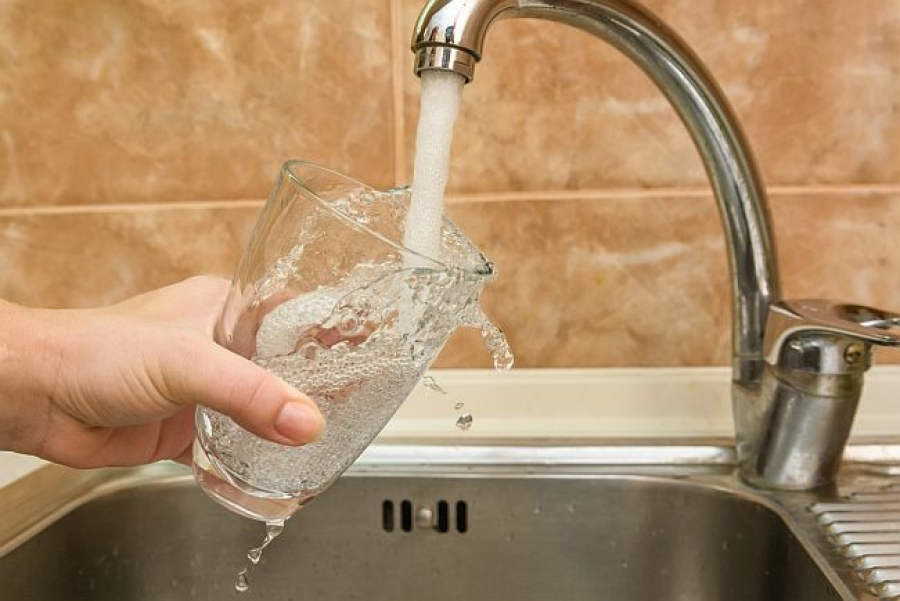
Do you have hard water? If you notice spots and films on glasses that come straight from the dishwasher, or you can't seem to work up a good lather when washing your hands, it's a good bet that you do.
You are not alone.The U.S. Geological Survey estimates that 85 percent of the country's population has some degree of hard water coming into their homes.
While the outward signs of hard water are annoying, the effects on your plumbing can be serious. Hard water can produce scale that clogs pipes, reducing water pressure. It can also cause mineral deposits to form in major appliances like water heaters, affecting the efficiency of the heater and shortening the life of the appliance.
How Do You Find Out for Sure?
Hard water has high levels of dissolved minerals in it, especially calcium and magnesium. You can determine the hardness of your water by checking the Consumer Confidence Report supplied by your water company. An even better idea is to test the water that comes into your house, because the amount of hardness is one of the factors in determining the size of the water softener to buy. Do-it-yourself tests are inexpensive and easy to use. Some water softener manufacturers and salt companies will supply test strips for free.
The water treatment industry measures hardness in grains per gallon (GPG). The table below lists common classifications.
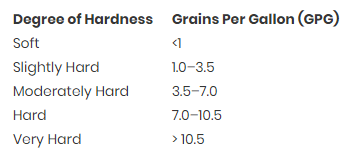 Source: Water Quality Association
What’s a Water Softener?
Water softeners are often point-of-entry appliances, meaning they treat all the water used in the home, but point-of-use systems are also available. Most water softener systems consist of a resin tank and a salt brine tank. The resin removes the hard water minerals from the water, while the brine tank regenerates the resin.
The size softener you need depends on the hardness of the water and the amount of water your household uses. A qualified water softener installer can calculate the size of the system.
Once installed, the water softening process is automatic. You simply need to keep it supplied with salt. On some softeners, you set the regeneration schedule. Newer, more advanced models feature demand-initiated regeneration, which regenerates the resin as needed. These systems typically use less water and are more energy efficient. Other features include:
- Products that include water softening and water filtration in one unit
- Easy access for replenishing salt supply
- Low salt indicators
What is a Water Conditioner?
Where water softeners remove hard water minerals, water conditioners alter them so that they cannot attach themselves to pipes, faucets and appliances. There are a few ways to do this, including the use of electronics. Water conditioners do not require salt and are easy to install. Consider a water conditioner if your hard water doesn't bother you but you want to protect your pipes, or if traditional softeners are not allowed in your municipality's water and sewer system.
Hard water can lead to serious problems for your home's plumbing. Fortunately, the right water softener or conditioner can virtually eliminate those issues before they lead to frustrating repairs.
Want to estimate your home improvement costs before talking with a contractor? Claim your home for free with bluehammer to estimate costs, secure your home inventory and learn more about your home.
* THIS REPORT IS AN OPINION THAT MAY BE INACCURATE AND IS PROVIDED SOLELY AS AN INFORMATIONAL TOOL NOT DESIGNED TO PROVIDE DEFINITIVE ANSWERS. ALL ELEMENTS ARE OFFERED "AS IS" AND BLUEBOOK EXPRESSLY DISCLAIM ANY AND ALL WARRANTIES, REPRESENTATIONS, AND GUARANTEES OF ANY NATURE, EXPRESS, IMPLIED OR OTHERWISE, INCLUDING BUT NOT LIMITED TO ANY IMPLIED WARRANTIES OF MERCHANTABLITILY, NONINFRINGEMENT, TITLE, QUIET ENJOYMENT, ACCURACY, OR FITNESS FOR A PARTICULAR PURPOSE. IN NO EVENT SHALL BLUEBOOK (OR THEIR SUPPLIERS) BE LIABLE FOR ANY GENERAL, DIRECT, SPECIAL, INCIDENTAL, INDIRECT OR CONSEQUENTIAL DAMAGES OF ANY KIND, OR ANY DAMAGES WHATSOEVER (INCLUDING WITHOUT LIMITATION, THOSE RESULTING FROM USE OF THE PRODUCT, INCLUDING : (1) RELIANCE ON THE MATERIALS PRESENTED, (2) COSTS OF REPLACEMENT GOODS, (3) LOSS OF USE, DATA OR PROFITS, (4) DELAYS OR BUSINESS INTERRUPTIONS, (5) AND ANY THEORY OF LIABILITY, ARISING OUT OF OR IN CONNECTION WITH THE USE OR PERFORMANCE OF INFORMATION) WHETHER OR NOT BLUEBOOK HAS BEEN ADVISED OF THE POSSIBILITY OF SUCH DAMAGES.